Are you struggling to truly grasp the complexities of human anatomy and physiology? Do traditional textbooks leave you feeling uninspired and overwhelmed by dense information? Discover the revolutionary world of A and P gamea, interactive platforms designed to transform your learning experience. This comprehensive guide explores how cutting-edge educational games, simulations, and apps are helping students and professionals alike to visualize, understand, and retain critical biological concepts. We dive into the best A and P gamea available today, offering tips for optimization, common mistakes to avoid, and advanced strategies to accelerate your understanding. Unlock your full potential in mastering the intricate systems of the human body through engaging gameplay and interactive challenges. Prepare to elevate your knowledge and ace those exams with confidence, leveraging modern tools for effective, enjoyable learning. This resource provides all you need to navigate the digital landscape of A and P education.
a and p gamea FAQ 2026 - 50+ Most Asked Questions Answered (Tips, Trick, Guide, How to, Bugs, Builds, Endgame)
Welcome to the ultimate living FAQ for A and P gamea in 2026, your go-to resource for mastering anatomy and physiology through interactive learning! This guide is meticulously updated to reflect the latest patches, features, and best practices across various platforms. Whether you are a beginner looking for foundational knowledge, a seasoned student aiming for advanced concepts, or just curious about optimizing your study routine, we have you covered. Dive into expert tips, practical tricks, comprehensive guides, and solutions for common issues, ensuring you make the most of these powerful educational tools.
Beginner Questions on A and P Gamea
What is the best A and P gamea for new students?
For new students, Visible Body Human Anatomy Atlas is highly recommended due to its intuitive interface and incredibly detailed 3D models. It offers clear anatomical labels and introductory modules, making complex structures accessible. Other great options include Essentials of Anatomy & Physiology apps which often provide simplified, gamified approaches to fundamental concepts.
How do A and P gamea make learning easier?
A and P gamea simplify learning by offering interactive 3D visualizations, enabling students to rotate, zoom, and virtually dissect structures. They provide active recall through quizzes and immediate feedback, reinforcing knowledge more effectively than passive reading. The engaging, gamified format also boosts motivation and makes studying feel less like a chore, enhancing overall comprehension.
Are there free trials available for popular A and P gamea?
Many popular A and P gamea, such as Complete Anatomy and Visible Body, offer free trial periods or limited free versions. These trials typically provide access to a subset of their features or a specific body system. Utilizing these trials is an excellent way to evaluate an app's interface and content before committing to a subscription, ensuring it meets your learning needs.
Learning Modes & Customization
How can I customize my A and P gamea experience?
Most A and P gamea offer extensive customization options, including layering different body systems, changing viewing angles, and adjusting transparency of structures. You can often create custom quizzes focusing on specific regions or topics. Some advanced apps allow you to save personalized scenes, add notes directly to 3D models, and track your progress in specific learning modules.
What are the different learning modes in A and P gamea?
A and P gamea typically feature various learning modes, including explore mode for free-roaming 3D interaction, quiz mode for self-assessment, and guided tours for structured learning. Some include dissection simulations, physiological animations showing processes, and clinical case studies to apply knowledge. These diverse modes cater to different learning styles and help reinforce concepts.
Can I create my own quizzes within A and P gamea?
Many premium A and P gamea platforms do allow users to create custom quizzes. This feature enables you to select specific anatomical structures, body systems, or physiological processes to be tested. Custom quizzes are invaluable for targeted revision, helping you focus on your weaker areas and ensuring efficient study time before exams or assessments.
Challenge & Progression
How do I track my progress in A and P gamea?
Most A and P gamea incorporate progress tracking systems that monitor your quiz scores, completion of modules, and time spent in different sections. These systems often include dashboards with visual summaries of your strengths and weaknesses. Consistent use of these tracking features helps identify areas needing more attention and provides motivation by showing your learning advancement over time.
What are the most effective challenge modes for retention?
Challenge modes that employ active recall, spaced repetition, and timed quizzes are most effective for retention. Labeling exercises, virtual dissection challenges, and clinical scenario simulations also significantly improve memory. Regularly engaging with these high-intensity modes forces your brain to retrieve information under pressure, strengthening its long-term storage and application.
Troubleshooting Common Issues
Why is my A and P gamea app crashing frequently?
Frequent crashes in your A and P gamea app often stem from insufficient device memory, outdated operating systems, or corrupted app data. Ensure your device meets the app's minimum requirements and update both your OS and the app to their latest versions. Clearing the app's cache or reinstalling it can also resolve persistent crashing issues, improving stability and performance.
My 3D models are not loading correctly in A and P gamea.
If 3D models are not loading correctly, check your internet connection for stability, as many apps stream high-resolution assets. Ensure your device's graphics drivers are updated, especially on PC. Lowering the graphics quality settings within the app, if available, can also resolve rendering issues, especially on older or less powerful hardware, ensuring smooth visualization.
Myth vs. Reality in A and P Gamea
Myth: A and P gamea are just for fun, not serious learning.
Reality: A and P gamea are sophisticated educational tools designed by experts, often used in medical schools and universities worldwide. They facilitate serious learning through interactive 3D models, detailed explanations, and scientifically accurate content. Their engaging nature is a means to enhance retention and make complex subjects more accessible, not to trivialize education.
Myth: You can learn everything from A and P gamea alone.
Reality: While incredibly powerful, A and P gamea are best used as supplementary learning tools. They excel in visualization and active recall but typically don't replace the comprehensive depth, theoretical context, and clinical reasoning provided by textbooks, lectures, and hands-on laboratory experiences. A balanced approach combining various resources yields the best results.
Myth: All A and P gamea are expensive.
Reality: While some premium A and P gamea require subscriptions or one-time purchases, many free or freemium options are available. These free versions often offer substantial foundational content or limited access. Prices for paid versions vary, and many educational institutions provide access, making these powerful tools accessible to a wide range of students.
Myth: A and P gamea are only useful for visual learners.
Reality: While highly beneficial for visual learners due to their 3D models, A and P gamea also cater to kinesthetic learners through interactive dissection and manipulation. Auditory learners can benefit from narrated guides. Their multi-modal approach engages various senses, making them effective for diverse learning styles, going beyond just visual input to enhance understanding.
Myth: A and P gamea are constantly buggy and unreliable.
Reality: Reputable A and P gamea developers invest heavily in bug fixing and regular updates to ensure reliability and accuracy. While no software is entirely bug-free, major educational platforms are generally very stable. Users should ensure their apps and devices are updated to the latest versions to minimize issues and enjoy a smooth, reliable learning experience.
Still have questions? Check out our other popular guides like 'Mastering Human Anatomy: A Step-by-Step Guide' or 'Physiology Explained: From Cells to Systems' for more in-depth knowledge!
Ever wondered if learning about the human body could actually be fun? Many of us, myself included, have faced the daunting challenge of memorizing countless anatomical structures and physiological processes. It is a tough subject, no doubt, but what if there was a way to make it more engaging? Could interactive experiences truly transform how you approach this vital field of study?
You are about to embark on an exciting journey into the world of A and P gamea. This guide will help you discover innovative ways to master anatomy and physiology like never before. We are diving deep into the digital tools that make complex biological concepts crystal clear. Get ready to boost your understanding and retention with these powerful learning aids.
The Rise of A and P Gamea: A New Era of Learning
Gone are the days when textbooks were your only companions in the quest to understand the human body. The landscape of education has dramatically shifted, embracing technology for immersive learning. A and P gamea represent this exciting evolution, offering dynamic ways to interact with complex scientific information.
These platforms range from detailed 3D anatomy atlases to engaging simulation games. They provide a hands-on approach that traditional methods often lack. Imagine dissecting a virtual heart or tracing nerve pathways without needing a cadaver. This immersive experience helps cement knowledge in a profound way.
From mobile apps to PC simulations, the accessibility of A and P gamea is ever-growing. Students, educators, and even medical professionals now leverage these tools. They enhance understanding and make learning processes much more efficient and enjoyable. The interactive nature keeps your mind active and curious.
What Exactly Are A and P Gamea?
A and P gamea are digital applications designed to teach anatomy and physiology through interactive experiences. They use visuals, quizzes, and simulations to convey information effectively. These tools often feature 3D models of organs, systems, and cells that users can manipulate.
Many incorporate gamified elements like challenges, progress tracking, and reward systems. This makes the learning process feel less like studying and more like playing. They transform abstract concepts into tangible, explorable virtual realities. Think of them as your personal, always-available anatomy lab.
Some popular examples include Visible Body Human Anatomy Atlas, Complete Anatomy, and various smaller educational games. They cater to different learning styles and levels of expertise. Finding the right A and P gamea can significantly impact your study habits and success.
Why Embrace A and P Gamea for Your Studies?
Why should you consider adding A and P gamea to your study toolkit? The benefits extend far beyond just making learning more fun. These digital tools address several common pain points students experience. They offer solutions that boost comprehension and recall.
Visual learners, especially, find these games invaluable due to their rich graphical content. Kinesthetic learners appreciate the interactive elements and virtual manipulation. They provide a multi-sensory approach to a subject that often feels abstract. This can be a game-changer for many learners.
Furthermore, A and P gamea allow for self-paced learning and repetition without judgment. You can explore challenging topics as many times as you need. This fosters a deeper, more robust understanding of the material. They are excellent complements to lectures and textbooks.
Enhanced Visualization and Spatial Understanding
Understanding the three-dimensional relationships of body parts is crucial in anatomy. Textbooks, despite their diagrams, often fall short in conveying this spatial complexity. A and P gamea excel here, offering interactive 3D models you can rotate, zoom, and dissect virtually.
This hands-on exploration allows you to see how organs fit together within body cavities. You can observe nerve pathways intertwining with muscles and bones. Such detailed visualization makes abstract concepts concrete and easier to grasp. It helps build a strong mental map of the human body.
By manipulating these models, you develop a much stronger spatial understanding. This is vital for future clinical applications and surgical comprehension. Imagine performing virtual dissections repeatedly to solidify your knowledge. These tools empower you with that capability.
Active Learning and Improved Retention
Passive learning, like simply reading, can lead to forgetfulness over time. A and P gamea promote active learning through quizzes, challenges, and interactive scenarios. This constant engagement forces your brain to retrieve and apply information, strengthening memory.
Many games incorporate spaced repetition, a proven technique for long-term retention. They present information at optimal intervals for review, ensuring that knowledge sticks. This active recall process is far more effective than just re-reading notes. It builds robust neural pathways for learning.
The immediate feedback provided by these games also helps correct misconceptions quickly. You learn from your mistakes right away, solidifying correct understanding. This iterative process is a cornerstone of effective learning strategies. You will find yourself remembering more for longer.
Top A and P Gamea to Consider in 2026
Choosing the right A and P gamea can feel overwhelming given the many options available. Don't worry, we've got your back. We have scoured the digital landscape to identify some of the standout platforms. These tools offer excellent value and proven educational benefits.
Remember to consider your specific learning style and the depth of content you need. Some are better for introductory courses, while others delve into advanced medical topics. Free versions or trials can help you decide before making a commitment. This selection covers a range of preferences.
Visible Body Human Anatomy Atlas
This is often considered the gold standard among anatomy learning apps. Visible Body offers incredibly detailed 3D models of all human body systems. You can explore anatomical structures with unprecedented clarity and precision. It is like having a fully interactive cadaver on your device.
The app includes animations, quizzes, and microanatomy models, covering everything from bones to cells. Its user-friendly interface makes navigation intuitive, even for beginners. Many educational institutions worldwide integrate Visible Body into their curricula. It is a powerful tool for serious students.
Complete Anatomy by 3D4Medical
Complete Anatomy provides an equally impressive and extensive anatomical resource. It features stunning 3D models with the ability to layer systems and customize views. Its focus on clinical relevance makes it particularly useful for medical students and professionals.
The platform offers a range of tools including virtual dissection, radiology imaging, and even simulated physiological functions. You can annotate models, share content, and participate in interactive courses. It's a comprehensive ecosystem for advanced anatomical learning and revision.
Physiology Animations and Interactive Simulations
While some A and P gamea excel in anatomy, others focus on dynamic physiological processes. Look for resources like Pearson's MasteringA&P or specific apps that simulate organ functions. These help visualize complex biochemical and cellular interactions.
These simulations allow you to manipulate variables and observe immediate effects. This deepens your understanding of cause-and-effect relationships within body systems. For example, you might adjust heart rate or blood pressure to see the systemic impact. Such interactive learning is incredibly effective.
Optimizing Your A and P Gamea Experience
Having the best tools is only half the battle; knowing how to use them effectively is the other. Optimizing your A and P gamea experience means integrating them smartly into your study routine. It involves conscious effort and strategic application of the resources at hand.
Don't just passively click through models; actively engage with the content. Treat these games as serious study aids, not just casual entertainment. They are powerful learning engines waiting for you to ignite them. Let's make every minute count.
Integrate with Traditional Study Methods
A and P gamea are fantastic, but they should complement, not replace, your textbooks and lectures. Use them to visualize concepts introduced in your readings or clarify complex diagrams. Think of them as an extra layer of understanding, not a standalone solution.
For instance, after reading about the cardiovascular system, open an A and P game to explore the heart in 3D. Identify the structures mentioned in your book and trace blood flow paths. This reinforces learning across different modalities and deepens comprehension.
Regular Practice and Focused Exploration
Consistency is key to mastering anatomy and physiology. Dedicate specific time slots for using your A and P gamea, just like you would for any other study task. Short, frequent sessions are often more effective than long, sporadic ones for retention.
When exploring, focus on one system or region at a time until you feel confident. Don't try to learn everything at once; that's a recipe for overwhelm. Break down complex topics into manageable chunks, using the game to dive deep into each segment. This targeted approach yields better results.
Utilize Quizzes and Challenge Modes
Many A and P gamea come packed with built-in quizzes and challenge modes. These are not just for fun; they are powerful assessment tools. Use them to test your knowledge and identify areas where you need more practice.
The immediate feedback helps reinforce correct answers and correct mistakes instantly. Think of these challenges as mini-exams that prepare you for the real deal. Regularly challenging yourself helps solidify information in your long-term memory. Don't shy away from these valuable features.
Common Mistakes and How to Avoid Them
Even with the best tools, it is easy to fall into common traps that hinder learning. Recognizing these pitfalls can help you steer clear and maximize your educational gains. Let's make sure your journey with A and P gamea is as smooth and productive as possible.
Avoiding these errors will ensure you get the most out of your interactive learning experience. Remember, these tools are meant to empower you, not to complicate things. A little awareness goes a long way in study efficiency.
Over-reliance on Visuals Without Conceptual Understanding
It's easy to get mesmerized by the stunning 3D graphics and think you understand the material. However, true mastery requires conceptual understanding beyond just visual recognition. Don't just identify structures; understand their function and clinical relevance.
Ask yourself 'why' each structure is shaped a certain way or 'how' a physiological process works. Connect the visuals to the underlying scientific principles and mechanisms. Actively question the content, rather than passively observing. This deeper engagement builds lasting knowledge.
Ignoring Quizzes and Self-Assessment
Some learners might prefer to only explore the models and skip the assessment features. This is a missed opportunity for active recall and identifying knowledge gaps. Quizzes are crucial for cementing information and testing your retention honestly.
Make a conscious effort to engage with all assessment tools provided by the game. Use them to pinpoint weak areas and then revisit those topics for targeted review. This iterative process of testing and re-learning is a hallmark of effective study. Embrace the challenge.
Failing to Connect with Real-World Applications
Anatomy and physiology are foundational sciences for many health professions. It is important to connect what you learn in the games to real-world scenarios. Think about how a specific anatomical variation or physiological dysfunction might impact a patient.
Some A and P gamea offer clinical case studies or scenarios; actively engage with them. If not, try to imagine real-life implications for the concepts you are studying. This adds depth and practical relevance to your learning. It prepares you for future professional challenges.
What Others Are Asking?
When diving into A and P gamea, many common questions pop up. It is totally normal to have these thoughts, and getting clear answers can really help. We've gathered some of the most frequently asked questions to help you navigate this exciting learning landscape effectively.
Knowing these answers can clarify potential confusion and guide your choices. Let's tackle these common queries head-on and ensure you feel confident moving forward. Your learning journey should be as smooth as possible, right?
Is A and P Gamea suitable for beginners?
Yes, many A and P gamea are incredibly suitable for beginners, offering introductory modes and simplified explanations. They often provide step-by-step guides and visual aids that make complex concepts accessible. These tools are designed to build foundational knowledge from the ground up, proving highly beneficial for new learners starting their anatomy and physiology journey. Look for apps with clear tutorials.
Can A and P Gamea replace textbooks?
No, A and P gamea cannot fully replace comprehensive textbooks but serve as powerful supplementary tools. Textbooks provide detailed theoretical context, research, and in-depth explanations that games often simplify. Gamea enhance visualization and active learning, but a balanced approach combining both resources offers the most thorough understanding for serious study and complete syllabus coverage.
What features should I look for in an A and P gamea?
Look for detailed 3D models with rotation and dissection capabilities, interactive quizzes, and clear anatomical labeling. Essential features include physiological animations, spaced repetition options, and cross-platform compatibility for seamless access. User-friendly navigation, regular updates, and content covering your specific curriculum are also vital for an effective learning experience. These elements maximize engagement and retention.
Are there free A and P gamea available?
Yes, several free A and P gamea or free versions with limited features are available, particularly on mobile app stores. These often provide foundational content or trial access to premium features, allowing you to sample before purchasing. While comprehensive free options might be rare, these no-cost alternatives offer excellent starting points for exploring interactive anatomy and physiology learning without initial investment.
How do A and P gamea improve retention?
A and P gamea improve retention through active learning, visual memory reinforcement, and gamified challenges. They employ interactive quizzes and immediate feedback, forcing information recall and correcting misconceptions instantly. The ability to manipulate 3D models and repeat difficult sections also strengthens neural pathways, ensuring concepts move from short-term to long-term memory effectively, making learning stick.
Does [setting] work on console/mobile?
Many A and P gamea are optimized for both mobile devices (iOS, Android) and PC platforms, with some even offering console compatibility for educational purposes. Performance may vary slightly between platforms, but developers aim for a consistent, high-quality experience across most modern devices. Always check the specific app's requirements and reviews to ensure it performs well on your preferred hardware.
How to import [codes/settings] in A and P gamea?
Most A and P gamea do not typically use 'codes' or 'settings' in the traditional gaming sense for content. Instead, customization might involve account logins for progress syncing, subscription activations, or in-app purchases for additional modules. Any specific import functions, like custom anatomical labels or study sets, would be clearly outlined within the application's help section or settings menu, so check there.
Future Outlook: What's Next for A and P Gamea?
The field of educational gaming, especially for subjects like anatomy and physiology, is rapidly evolving. We're seeing exciting developments that promise even more immersive and effective learning experiences. What innovations can we expect in the coming years?
Expect to see more integration with virtual reality (VR) and augmented reality (AR) technologies. Imagine walking through a virtual human body or overlaying anatomical structures onto your own body using AR. These advancements will revolutionize how we interact with biological concepts. The future of A and P gamea looks incredibly bright and full of potential.
Furthermore, artificial intelligence (AI) will likely play a larger role in personalizing learning paths. AI could adapt game difficulty, recommend specific modules, and identify individual learning gaps. This tailored approach will make A and P gamea even more powerful educational tools. The continuous improvements mean better learning outcomes for everyone.
Key Takeaways for Mastering A and P Gamea
To truly master anatomy and physiology with these incredible tools, remember these key points. First, actively engage with the content, don't just passively observe. Second, integrate games with your traditional study materials for a holistic approach. Third, consistently utilize quizzes and challenge modes for effective self-assessment and retention. Finally, avoid common pitfalls like over-reliance on visuals without deep understanding. Embrace the interactive journey, and you'll find yourself understanding complex biological systems like a pro.
Tips to improve understanding in A and P gamea include active recall through quizzes, utilizing interactive 3D models for visualization, and engaging with challenge modes. Pros: enhanced engagement, improved retention, visual learning support. Cons: can be simplistic, may not cover all syllabus details, potential for over-reliance on digital tools. Key strategies involve consistent practice and integrating games with traditional study methods for optimal results.
35




Top 10 Most Anticipated Games Of 2026 What To Watch Out For GAMES IN 2026 . The Most Anticipated Games Coming To PlayStation 5 In 2026 Guides And Range Games 2026 Keyart 01 05dec25$en. Italy 2026 Winter Games Paralympics Torches Unveiled In Milan Reuters . One Of My Favorite Board Games Is Getting A Massive New Expansion To . 31 Of The Biggest And Coolest 2026 Games We Can T Wait To Play Global 2026kotaku 1200x675





Winter S Jest Event Jetzt Live Xgp 2026 01.webp. 2026 NBA All Star Game To Feature New U S Vs World Competition NBA Com All Star 26 Explainer AS26 V716x9 03 1568x882 . The Future Games Show Is Returning In 2026 With 6 New Shows GamesRadar . SNK All Games Characters Moves List Lore And News The Fighting Games Fighting Games 2026 News Dlcs Updates Releases. 10 Upcoming AAA Games You Should Actually Be Excited About 2025 2026 Upcoming 01





TOP 21 NEW Upcoming Games Of 2026 YouTube . 5 Most Anticipated Video Games For 2026 Deltia S Gaming 5 Most Anticipated Video Games For 2026 . National Private Schools Athletic Association Games 2026 Media. The Top Games To Play In January 2026 FullCleared Fullcleared Most Anticipated Games Of 2026 1536x864 . 9 Biggest PC Games Coming In 2026 Insider Gaming PC Games 2026





New Games Everywhere Are You Ready For The Next Big Thing Upcoming 2026 Games That Might Steal Gta Vis Thunder . Calend Rio De Lan Amentos De Jogos De 2026 PS Verso Lancamentos Games 2026.webp. Games 2026 One Year To Go Countdown Games 2026 Akani Simbine .optimal . When Is The 2026 Winter Olympics Opening Ceremony 2026 Winter Olympics 1 . Carlton Lands Four Prime Time Games To Start AFL 2026 Season Herald Sun


Become Purely And Simply Evil With The Halloween Video Game Unmasking . Birding Tour At Shiawassee River State Game Area Canceled . American Association Of Baseball Main 768x960 . Should Cavs Tank Final Games To Avoid Celtics In 2026 Playoffs Jimmy. The Guardians And Royals Square Off In The Finale Of A Three Game



Woori Investment Securities Launches Stock Price Prediction Game With News P1 . How To Watch The Final Four TV Channel Streaming And Game Time. The Guardians And Royals Square Off In The Finale Of A Three Game . What MLB Games Are Today Opening Day 2026 Schedule For Thursday AOL. How To Celebrate Baisakhi In Schools 2026 Creative Activities And Fun


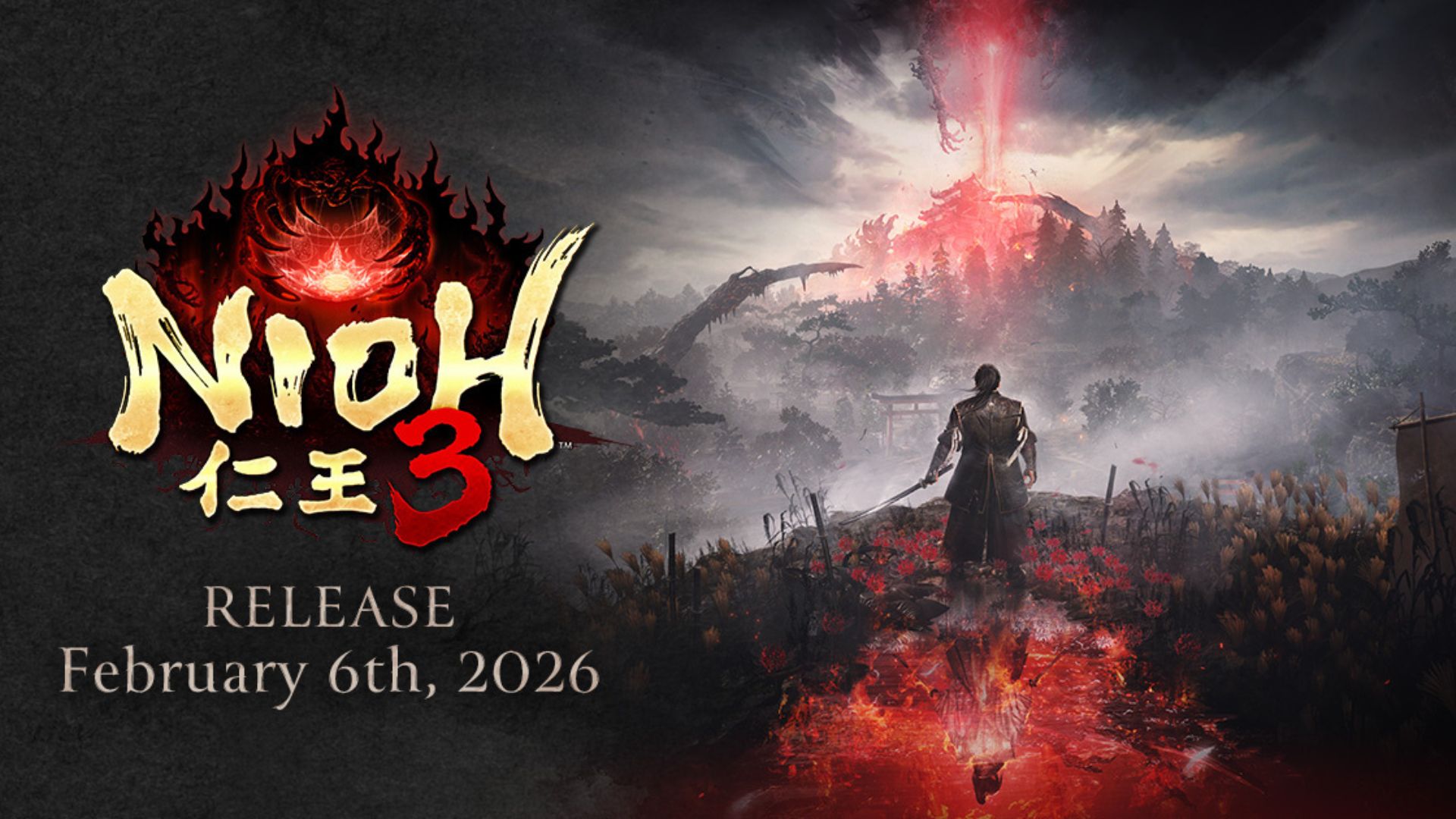


The Most Anticipated Games Coming To PlayStation 5 In 2026 Guides And Range Games 2026 Image Block 01 Desktop 27nov25$en. The 6 Best Card Games Of 2026 Reviewed And Tested By Experts GamesRadar . 5 Most Anticipated Video Games For 2026 Deltia S Gaming Most Anticipated Video Games For 2026 Nioh 3 . 1 . 2026 Puducherry Elections Key That Can Change The Poll Game Image