Dive into the world of Roblox airplane scripts, where virtual aviation takes flight with unparalleled realism and customization. In 2026, PC gamers are increasingly seeking immersive experiences, and sophisticated airplane scripts offer just that, transforming standard Roblox planes into dynamic, controllable aircraft. This guide explores the foundational concepts, advanced coding techniques, and practical applications of these powerful scripts, empowering creators and players alike to elevate their aerial adventures. Learn how to implement realistic flight physics, develop custom aircraft controls, troubleshoot common scripting issues, and discover trending script features that define modern Roblox aviation. From basic flight controls to complex aerodynamic simulations, we cover everything you need to know to pilot your creations or explore highly detailed flight experiences on the platform. Unlock the full potential of Roblox's scripting environment to build or enjoy the most cutting-edge aircraft gameplay.
How do I make my Roblox airplane fly faster with scripts?
To make your Roblox airplane fly faster, you'll need to increase the applied thrust force in your script. This usually involves adjusting the magnitude of your VectorForce or BodyForce directly. Ensure your lift calculations scale appropriately with speed to prevent stalls, and optimize drag reduction through aerodynamic design in your model.
Can I use free airplane scripts from the Roblox toolbox?
Yes, you can use free airplane scripts from the Roblox toolbox, but exercise caution. Always review the code for malicious content or inefficiencies before integrating it into your game. Many free scripts offer a great starting point for learning, but may require optimization or modification for specific needs and security.
What is the best way to learn Lua for Roblox airplane scripting?
The best way to learn Lua for Roblox airplane scripting is by combining official Roblox documentation, community tutorials (YouTube, developer forums), and hands-on practice. Start with basic Lua syntax, then apply it to simple Roblox tasks before tackling complex flight physics. Consistent practice and small projects are key to mastery.
How do I add custom sounds to my Roblox airplane script?
To add custom sounds, place Sound objects within your airplane model's parts (e.g., engine block). In your script, use Sound:Play(), Sound:Stop(), and manipulate properties like Sound.PlaybackSpeed or Sound.Volume based on engine RPM, speed, or other flight parameters. Spatial audio enhances realism significantly.
Are there specific coding practices for multiplayer airplane scripts?
For multiplayer airplane scripts, crucial practices include client-server model adherence (input on client, physics on server, visual feedback on client), robust anti-exploit measures, and efficient network replication. Use RemoteEvents and RemoteFunctions for communication, and ensure server-side validation of critical player actions to prevent cheating and maintain synchronization.
Guide How to Master Roblox Airplane Scripts 2026
The virtual skies of Roblox are more dynamic and realistic than ever in 2026. As PC gaming continues its rapid evolution, with AI-enhanced experiences and cloud gaming pushing boundaries, players are demanding deeper immersion. For aviation enthusiasts within Roblox, this means going beyond simple vehicles and embracing sophisticated Roblox airplane scripts. These powerful pieces of Lua code are the engines behind truly authentic flight simulations, transforming static models into high-fidelity flying machines. Whether you're a budding developer aiming to build the next great flight sim or a player seeking the ultimate aerial adventure, understanding these scripts is paramount. This comprehensive guide will navigate you through the intricacies of Roblox airplane scripting, from foundational concepts to advanced aerodynamic modeling and future trends, ensuring your virtual flights soar to new heights.
The landscape of PC gaming in 2026 is characterized by stunning visuals powered by next-gen GPUs supporting advanced ray tracing and upscaling technologies like DLSS and FSR. High-refresh-rate monitors are now standard, delivering buttery-smooth experiences. Within this vibrant ecosystem, user-generated content platforms like Roblox thrive, offering unique opportunities for specialized niches like realistic flight. Roblox airplane scripts are at the forefront of this niche, providing the tools to craft detailed cockpits, functional instrumentation, and physics-driven flight models. We'll explore what makes these scripts so vital, how to craft them, optimize their performance, and peer into the future of Roblox aviation. Prepare for takeoff!
What Are Roblox Airplane Scripts and Why Are They Popular in 2026?
Roblox airplane scripts are custom-written Lua programs that give life to aircraft models within the Roblox engine. They define everything from how a plane moves, responds to user input, interacts with the environment, and even how its internal systems (engines, landing gear, flaps) function. In 2026, their popularity has surged due to several factors: the increasing sophistication of the Roblox engine itself, a growing community of talented developers, and a player base eager for more realistic, in-depth simulation experiences beyond typical arcade-style gameplay. The availability of powerful tools and community-shared knowledge has made complex flight mechanics more accessible than ever, driving innovation in Roblox's aviation sector.
What is an Airplane Script in Roblox?
An airplane script in Roblox is a piece of Lua code that dictates the behavior, physics, and interactive elements of an aircraft model within a Roblox experience. These scripts enable features like realistic flight controls, custom animations, engine management, damage models, and user interface interactions, transforming static models into dynamic, playable vehicles. Without a script, a Roblox airplane model is merely a collection of parts; with a well-crafted script, it becomes a responsive, immersive flying machine capable of complex maneuvers and interactions.
These scripts typically reside within the aircraft model itself or in a central `Script` or `ModuleScript` that manages multiple planes. They use Roblox's API (Application Programming Interface) to access and manipulate properties of parts, detect player input, apply forces, and trigger visual or audio effects. Modern scripts often employ advanced object-oriented programming principles to create modular, maintainable, and scalable systems for various aircraft types.

Why are these scripts essential for realistic flight in Roblox?
Roblox's default physics engine provides basic object interaction and collisions, but it doesn't natively simulate complex aerodynamic forces required for realistic flight. Airplane scripts bridge this gap by custom-calculating and applying forces such as lift, drag, thrust, and gravity based on the aircraft's speed, orientation, and control surface positions. This allows developers to create nuanced flight models where planes can stall, turn with G-forces, perform intricate aerobatics, and respond authentically to changes in throttle and control inputs. Without these custom scripts, flight would be rudimentary, lacking the depth and challenge that enthusiasts crave.
Furthermore, realistic flight extends beyond just physics. Scripts are crucial for implementing functional cockpits with interactive buttons, gauges, and displays. They manage engine start-up sequences, landing gear deployment, flap adjustments, and even complex damage models that affect flight performance. The level of detail and realism achievable through advanced scripting is what elevates Roblox flight experiences from simple games to compelling simulations that can rival dedicated flight simulators in certain aspects, especially within the UCG space.
Getting Started with Roblox Airplane Scripting
Embarking on the journey of Roblox airplane scripting can seem daunting, but with a structured approach, it's highly rewarding. The key is to start with fundamental concepts and gradually build up to more complex systems. Understanding the basics of Lua and how it interacts with the Roblox environment is your first step. By 2026, the resources available to new scripters are vast, including comprehensive documentation, community forums, and video tutorials, making it easier than ever to learn.
What are the prerequisites for scripting airplanes?
To script airplanes in Roblox, you'll need a fundamental understanding of Lua programming, familiarity with the Roblox Studio interface, knowledge of basic physics concepts (forces, vectors), and a strong grasp of object-oriented programming principles within Roblox's data model. Experience with Roblox's 'Parts' and 'Constraints' is also highly beneficial. Specifically, you should be comfortable with variables, loops, conditionals, functions, tables, and event handling in Lua. Within Roblox Studio, knowing how to manipulate parts, create models, use the explorer and properties windows, and test your creations is essential. A basic grasp of vector math will be invaluable for calculating forces and directions.
Furthermore, patience and problem-solving skills are crucial. Scripting, especially for complex systems like airplanes, involves a lot of trial and error, debugging, and iterative refinement. Don't be afraid to experiment, break things, and learn from your mistakes. The Roblox developer community is also an invaluable resource for support and guidance.

How do I create a basic functional airplane script?
Creating a basic functional airplane script involves several core components. First, you'll need a well-structured airplane model in Roblox Studio, typically consisting of a primary 'Body' part and various other components like wings, tail, engines, and control surfaces. The script itself will usually be a `Script` object placed within the main aircraft model or `ServerScriptService`.
- Input Handling: Use `UserInputService` to detect player keyboard or gamepad inputs (e.g., W/S for throttle, A/D for yaw, Up/Down arrows for pitch).
- Force Application: Based on input, apply forces to the aircraft. For simple flight, you might use `BodyForce` or `VectorForce` for thrust and `BodyGyro` or `CFrame` rotations for pitch, roll, and yaw.
- Flight Physics (Basic): Implement rudimentary lift and drag calculations. Lift can be a force applied upwards proportional to speed squared, while drag is a force opposing current velocity.
- Engine Power: Adjust the `BodyForce` or `VectorForce` magnitude based on throttle input.
- Control Surfaces: For more realism, rotate actual wing parts (ailerons, elevator, rudder) visually and use their orientation to influence the flight forces.
- Looping Mechanics: Use `game:GetService("RunService").Heartbeat:Connect(function(dt))` to continuously update physics and controls every frame.
Starting with a simple "fly box" concept that just moves and rotates is a great way to grasp the fundamentals before adding complex models and advanced physics.
What are common Lua functions used in airplane scripts?
For sophisticated Roblox airplane scripts, a variety of Lua functions and Roblox API calls are frequently employed. These include:
- `game:GetService("UserInputService")`: Essential for capturing player input (keyboard, mouse, gamepad).
- `game:GetService("RunService")`: Provides events like `Heartbeat` or `Stepped` for running physics and logic updates frame-by-frame.
- `Vector3.new(x, y, z)`: Used extensively for defining positions, directions, and forces in 3D space.
- `CFrame.new(position, lookAt)` / `CFrame.Angles(rx, ry, rz)`: Critical for managing object orientation and rotation.
- `BasePart.Velocity` / `BasePart.RotationalVelocity`: Accessing current speed and angular velocity of parts.
- `BasePart:ApplyImpulse(vector)` / `BasePart:ApplyAngularImpulse(vector)`: Applying instantaneous forces or torques.
- `BodyForce`, `VectorForce`, `BodyGyro`, `BodyAngularVelocity`: Older but still relevant constraints for applying continuous forces and torques. Newer methods often prefer directly manipulating `AssemblyLinearVelocity` and `AssemblyAngularVelocity` or using `Attractor`/`Torque` constraints for more precise physics.
- `math.sin()`, `math.cos()`, `math.atan2()`: Trigonometric functions for complex force calculations and vector math.
- `Raycasting`: For ground detection, collision checks, or sensing nearby objects.
- `TweenService`: For smooth animations of control surfaces, landing gear, or cockpit elements.
- `ModuleScripts`: For organizing complex code into reusable modules, crucial for maintainability.
Mastering these functions and services allows for the creation of incredibly detailed and responsive flight systems. The best practice in 2026 often involves using more physics-based constraints and `Assembly` manipulation rather than older `BodyMovers` for performance and accuracy.
Advanced Flight Mechanics and Customization in 2026
Once you've mastered the basics, the true power of Roblox airplane scripts emerges in advanced flight mechanics and deep customization. This is where developers push the boundaries of realism, creating experiences that feel less like a game and more like a true flight simulation. In 2026, the integration of more sophisticated physics models, AI-driven components, and highly interactive cockpits is becoming the standard for high-quality aviation experiences on Roblox.
How can I implement realistic aerodynamics in my Roblox plane?
Implementing realistic aerodynamics in Roblox involves a deep dive into physics principles. It moves beyond simple forces to calculate lift, drag, and thrust dynamically based on the aircraft's geometry, angle of attack, airspeed, and air density. This typically requires:
- Surface Area Calculation: Determine the effective surface area of wings and control surfaces that interact with the "air."
- Angle of Attack (AoA): Calculate the angle between the wing's chord line and the oncoming air. Lift and induced drag are highly dependent on AoA.
- Lift Formula: Implement a formula like `Lift = 0.5 * rho * V^2 * S * Cl`, where `rho` is air density, `V` is airspeed, `S` is wing surface area, and `Cl` is the coefficient of lift (which varies with AoA).
- Drag Formula: Calculate various drag components: parasitic drag, form drag, skin friction drag, and induced drag. `Drag = 0.5 * rho * V^2 * S * Cd`, where `Cd` is the coefficient of drag.
- Thrust Vectoring: Precisely apply thrust forces from engines, potentially accounting for engine performance curves based on altitude and speed.
- Moments and Torques: Apply rotational forces (torques) around the aircraft's center of mass to simulate pitch, roll, and yaw caused by control surfaces. This requires understanding how ailerons, elevators, and rudders create aerodynamic moments.
Many developers create complex raycasting systems to detect surfaces and calculate their effective angles, or use simplified geometric approximations for performance. ModuleScripts are vital here to encapsulate complex physics calculations for reusability and maintainability across different aircraft. The goal is to make the plane feel genuinely airborne, not just pushed around by invisible forces.

What methods are used for custom control systems?
Custom control systems in Roblox airplanes go beyond basic keyboard inputs. They often involve:
- Advanced Input Mapping: Supporting gamepads, joysticks, and even custom hardware inputs via external programs. This involves reading raw input data and translating it into script actions.
- Flight Assistance Systems: Implementing features like auto-pilot, trim controls, stability augmentation systems (SAS), and fly-by-wire logic. These systems can smooth out player inputs, maintain specific attitudes, or even fly predefined routes.
- Interactive Cockpits: Creating functional switches, levers, and dials that players can click or interact with using their mouse, simulating a true cockpit experience. This often involves `ClickDetectors`, `ProximityPrompts`, and `UserInputService` for mouse interaction.
- Heads-Up Displays (HUDs) & MFDs: Developing rich UI elements that display flight data (airspeed, altitude, heading, engine status) in real-time. This uses Roblox's `ScreenGui` elements and frequent updates from the flight script.
- Camera Systems: Implementing various camera modes (cockpit, chase, orbital) that enhance player immersion and control perception.
The trend in 2026 is towards highly modular control systems, allowing developers to easily swap out input schemes or add new functionalities without rewriting core flight logic. This is often achieved using `ModuleScripts` for different control modules that communicate with a central flight controller.
How does AI integration enhance autonomous flight in Roblox?
AI integration in Roblox airplane scripts is an exciting frontier in 2026, pushing towards more sophisticated autonomous flight. This can enhance games in several ways:
- AI-Controlled NPCs: Creating non-player character aircraft that fly realistic patterns, engage in dogfights, or perform transport missions. This involves pathfinding algorithms, decision-making logic, and AI "pilots" that interact with the same flight script as player-controlled planes.
- Co-Pilot Systems: Implementing virtual co-pilots that can assist players with tasks like managing engine power, deploying landing gear, or navigating. These AI components can take over certain functions, allowing players to focus on core flight.
- Dynamic Weather Response: AI systems can be programmed to react to changing weather conditions (turbulence, crosswinds) by adjusting flight parameters or providing warnings to the player, making the environment more dynamic.
- Autonomous Drones/UAVs: Developing fully autonomous drones for reconnaissance, cargo delivery, or combat scenarios within an experience, operating independently or on predefined missions.
The use of neural networks and machine learning, even in a simplified form, is starting to appear in advanced Roblox projects, allowing AI to "learn" optimal flight paths or evasive maneuvers. This level of AI makes Roblox experiences significantly more engaging and unpredictable, adding immense replayability.
Optimizing Performance and Troubleshooting Common Issues
Even the most brilliantly conceived Roblox airplane script can falter if not optimized for performance or plagued by bugs. With Roblox experiences being played on a wide range of devices, from high-end gaming PCs to mobile phones, ensuring smooth performance is crucial. Effective troubleshooting is equally vital for maintaining a robust and enjoyable flight experience for all players.
How do I ensure my airplane script runs smoothly on all devices?
Optimizing `airplane script roblox` for a smooth experience across various devices is critical for broad appeal in 2026. Here's how to ensure your script runs efficiently:
- Minimize Loops: Avoid unnecessary `while true do` loops. Utilize `RunService` events like `Heartbeat` or `Stepped` for physics and logic updates, which are optimized by Roblox.
- Efficient Physics Calculations: Simplify complex aerodynamic equations where possible. Use lookup tables for coefficients of lift/drag instead of calculating them every frame if performance is an issue.
- Local Scripting for Visuals: Offload non-critical visual updates (e.g., cockpit animations, UI updates specific to the client) to `LocalScripts` to reduce server load.
- Part Instancing & Streaming: Utilize Roblox's streaming capabilities and keep part counts low in the immediate vicinity of the plane. Complex models can be optimized by reducing triangle count or using Union operations judiciously.
- Garbage Collection: Be mindful of creating and destroying objects frequently, as this can lead to performance spikes. Reuse objects or pool them where possible.
- Network Optimization: Only replicate necessary data across the network. Don't constantly send every tiny change in part property to all clients. Use `RemoteEvents` and `RemoteFunctions` sparingly and efficiently.
- Profile Scripts: Use Roblox Studio's built-in `Script Performance` and `MicroProfiler` tools to identify bottlenecks in your code. These tools are invaluable for pinpointing exactly where performance is being lost.
Regular testing on different hardware configurations and connection speeds will reveal potential performance issues before release.

What are common errors in Roblox airplane scripts and how do I fix them?
Scripting airplanes often involves complex logic, leading to common errors. Here are some frequent issues and their troubleshooting approaches:
- Nil Value Errors: Occur when a script tries to access a property or call a function on a variable that is `nil` (e.g., `script.Parent.Wing.Velocity` where `Wing` doesn't exist).
- Fix: Double-check paths to parts. Use `WaitForChild()` for dynamically loaded parts. Add `if part then ... end` checks.
- Incorrect Force Application: Plane doesn't fly, flies erratically, or flips uncontrollably.
- Fix: Verify force directions (`Vector3`), magnitudes, and application points. Ensure forces are applied relative to the aircraft's `CFrame` for correct orientation. Check that `Anchored` property of parts is `false`.
- Physics Glitches/Clipping: Plane shakes, clips through terrain, or parts fall off.
- Fix: Adjust `CustomPhysicalProperties` for parts (density, friction, elasticity). Ensure correct use of `Massless` property. Check for overlapping parts creating unnecessary collisions. Consider using `AlignPosition` and `AlignOrientation` for smoother movement instead of raw `BodyMovers`.
- Input Latency: Delay between player input and plane response.
- Fix: Ensure input handling is done in a `LocalScript` and sent to the server efficiently via `RemoteEvent` for critical actions. Process non-critical visual feedback locally.
- Performance Lag: Game slows down when the plane is active.
- Fix: Refer to the optimization tips above. Use `Script Performance` to pinpoint heavy computations.
- Script Not Running: No errors, but the script doesn't seem to do anything.
- Fix: Check if the script is enabled. Verify its parent and location (e.g., `ServerScriptService` for server scripts, `StarterPlayerScripts` for local scripts). Look for any `print()` statements in the output.
Effective debugging involves using `print()` statements to trace variable values, using Roblox Studio's debugger to step through code, and isolating problematic sections of your script.
The Future of Roblox Aviation: Trends for 2026 and Beyond
The world of Roblox aviation is continuously evolving, mirroring the broader trends in PC gaming. In 2026, we're seeing exciting developments that promise even more immersive and technically advanced flight experiences. These trends are driven by both advancements in Roblox's platform capabilities and the creativity of its developer community, ensuring that Roblox airplane scripts will continue to push the envelope.
What new technologies are impacting Roblox airplane development?
Several new technologies are profoundly impacting Roblox airplane development in 2026:
- Enhanced Physics Engine: Roblox's internal physics engine continues to improve, offering more stable and predictable behavior. This allows developers to rely less on custom workarounds and more on the engine's native capabilities for realistic interactions.
- Material Variants & PBR Texturing: The adoption of Physically Based Rendering (PBR) materials allows for incredibly realistic visual fidelity on aircraft models, from weathered metal fuselages to detailed cockpit surfaces, enhancing immersion.
- Live Operations & AI-Assisted Scripting: Tools within Roblox Studio are becoming smarter, with some integrating AI to suggest code snippets or identify potential errors, speeding up development. Live editing and hot-reloading of scripts also streamline the creation process.
- Expanded Networking Features: More robust and flexible networking APIs facilitate smoother multiplayer experiences, reducing latency and allowing for complex synchronized aircraft operations, such as formation flying or large-scale aerial battles.
- Immersive Audio Systems: Advanced spatial audio and custom sound properties allow for highly realistic engine sounds, wind noise, and cockpit audio, significantly adding to the simulation's authenticity.
These technological advancements provide a powerful toolkit for developers, enabling them to create airplane experiences that are not only visually stunning but also deeply interactive and physically accurate.
How will cloud gaming influence Roblox flight simulations?
Cloud gaming, a major trend in 2026, holds significant promise for Roblox flight simulations and airplane script roblox. Here's how:
- Accessibility: Cloud gaming platforms allow users with lower-end PCs or even mobile devices to access graphically intensive Roblox flight simulations that would otherwise be unplayable. This dramatically expands the potential audience for high-fidelity aircraft experiences.
- Performance Consistency: By offloading rendering and some simulation logic to powerful cloud servers, players can enjoy consistent high frame rates and detailed graphics, regardless of their local hardware. This means complex aerodynamics and highly detailed environments can be experienced by more players.
- Server-Side Physics: For some very demanding simulations, aspects of the physics engine could potentially be run on the cloud server and streamed to the client, leading to even more precise and synchronized flight models across multiplayer experiences.
- Reduced Download/Update Burden: Players access games instantly without large downloads or updates, making it easier to jump into new or updated flight simulations.
While Roblox is already largely cloud-based in its infrastructure, the rise of third-party cloud gaming services further extends its reach, democratizing access to the most demanding and realistic `airplane script roblox` experiences. This encourages developers to push visual and simulation boundaries without alienating a large segment of the player base.
Conclusion: Soaring Beyond the Hangar in Roblox 2026
As we've explored, Roblox airplane scripts are the invisible force propelling virtual aviation to incredible heights in 2026. From mastering basic controls to implementing advanced aerodynamic models and embracing AI-driven features, the possibilities for creating and enjoying realistic flight simulations are vast and ever-expanding. The dedicated efforts of the Roblox development community, coupled with continuous platform advancements, ensure that the skies within Roblox remain an exciting frontier for innovation.
Whether you're a seasoned scripter refining your next aerial masterpiece or a curious player looking to dive into the most authentic flight experiences, understanding the power and potential of these scripts is key. The future promises even more realism, greater accessibility through cloud gaming, and groundbreaking interactive elements. So, equip yourself with knowledge, fire up Roblox Studio, and prepare to redefine what's possible in the virtual skies. What innovative airplane script will you create or discover next?
About the Author: As a veteran PC gamer and an avid Roblox developer with over a decade of experience crafting immersive experiences, I specialize in pushing the boundaries of what's possible within user-generated content platforms. My passion lies in realistic physics simulations and engaging interactive systems, especially in the realm of virtual aviation and complex vehicle mechanics.
Frequently Asked Questions about Roblox Airplane Scripts
Custom flight mechanics, enhanced realism, advanced aerodynamics, robust control systems, roleplay integration, performance optimization, secure scripting practices, community resources.
35


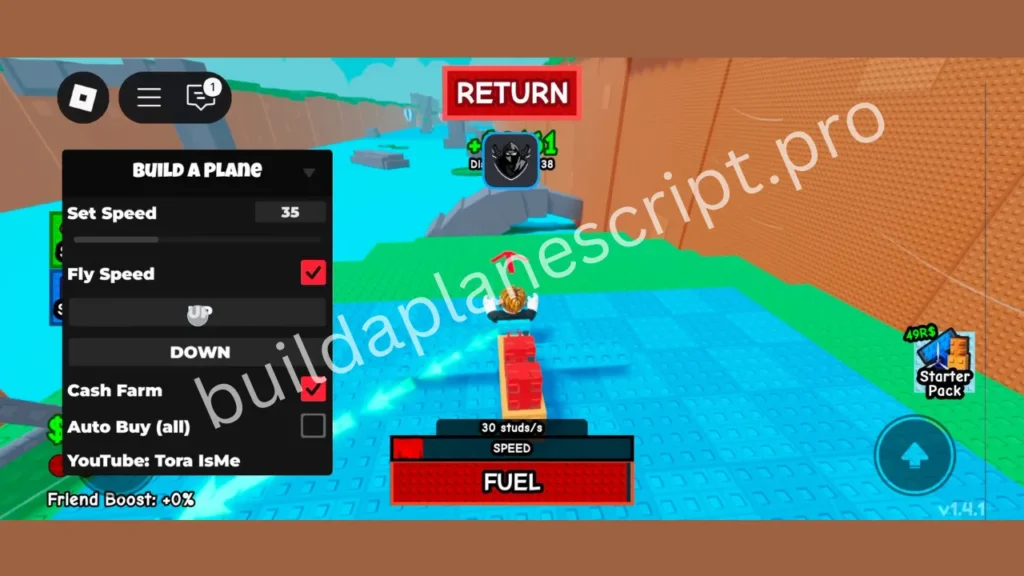
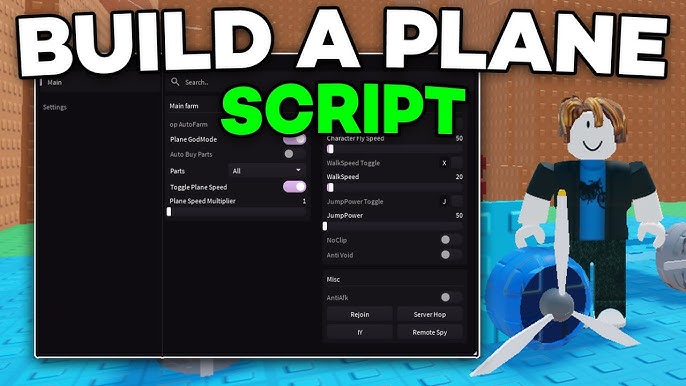
Best Build A Plane Scripts For Roblox May 2026 Build A Plane Script . How To Create Roblox Plane Scripts Build A Plane Script Use.webp. How To Create Roblox Plane Scripts Top 3 Ultimate Scripts For Become A Plane And Fly For Roblox 1024x536 . How To Create Roblox Plane Scripts Build A Plane Script 2. Build A Plane Script Best Roblox Scripts Official Build A Plane Script

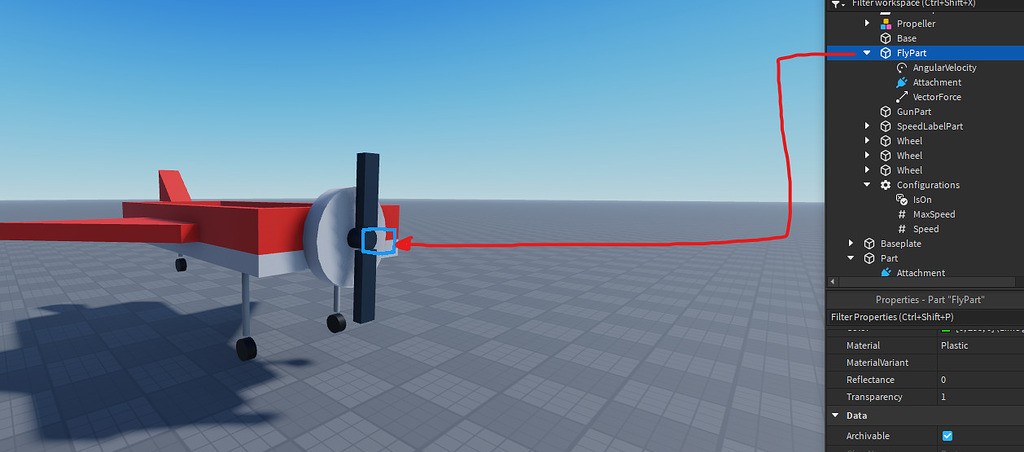


Roblox Build A Plane Latest Scripts May 2026 Roblox Build A Plane . How To Create Roblox Plane Scripts 2 1024x452 . How To Create Roblox Plane Scripts Roblox Build A Plane Codes.webp. How To Create Roblox Plane Scripts . Link Check Results For Roblox Airplane Story Script Pages Dev 9f81cd3a 5ce1 4817 Af99



NEW UPDATE Roblox Build A Plane Script Fast Farm Fly Speed And . Roblox Fe Script Showcase Fe Airplane YouTube . How To Make A Fighter Airplane Companion Roblox Scripting Tutorial . Universal Script Desync Script Roblox Scripts ScriptBlox NoFilter. 5 OP Build A Plane Scripts Buildaplane Wiki 5 OP Build A Plane Scripts



How To Create Roblox Plane Scripts . How To Create Roblox Plane Scripts 2 690x378 . Build A Plane Plane Hub Roblox Scripts ScriptBlox NoFilter. Roblox Plane Training Codes Active Rewards For May 2026 Roblox Plane Training Codes 1 768x512 . How To Create Roblox Plane Scripts Build A Plane
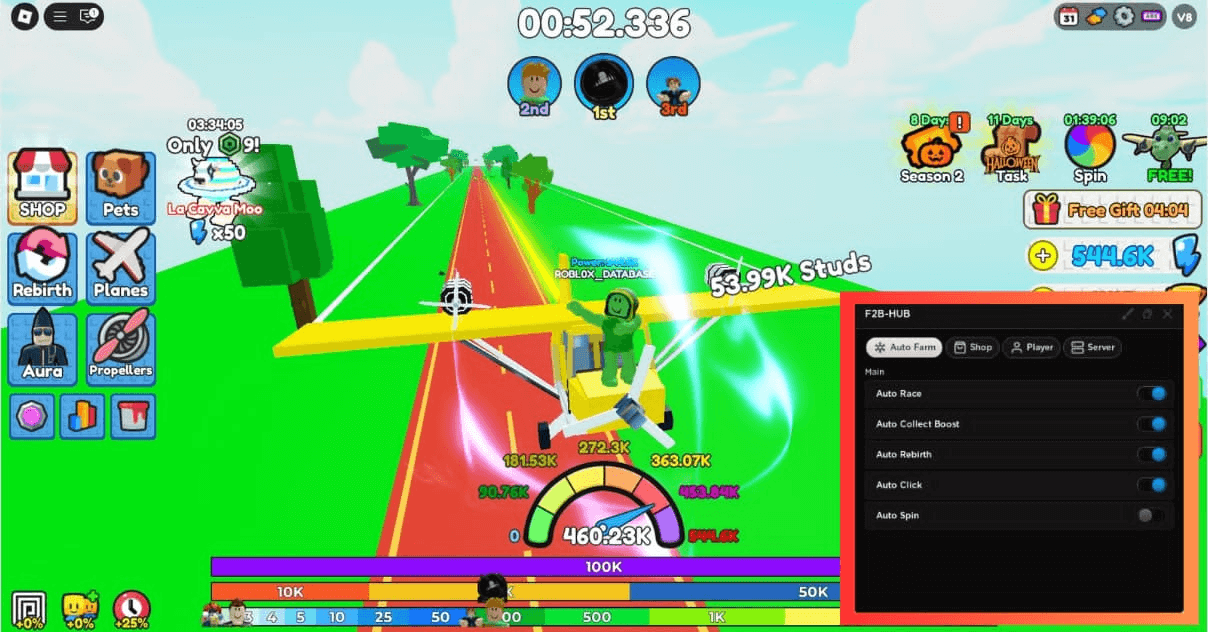


Roblox IDLE Scripts 2026 Plane Race With 99 Propellers Script . Roblox Plane Crazy Codes May 2026 TechWiser Roblox Plane Crazy Codes.webp. Build A Plane Script No Key INF Money Auto Farm 2026 Logo.webp. How To Script A Plane On Roblox YouTube Hqdefault . Roblox Plane Training Codes May 2026 UPDATED MrGuider Roblox Plane Training Codes 768x429



How To Create Roblox Plane Scripts Build A Plane Script . Roblox Launch Plane For Brainrots Codes April 2026 TechWiser Roblox Launch Plane For Brainrots Codes.webp. Roblox Build A Plane Codes March 2026 5 New Codes Available Roblox Build A Plane Codes 1024x576 . Roblox Build A Plane Latest Scripts January 2026 Roblox Fisch . Roblox Build A Plane Latest Scripts January 2026 Mobile Matters Tech


Build A Plane Script Latest Roblox Script October 2025 Build A Plane Script 3. Roblox Build A Plane Latest Scripts January 2026. Ai Airplane Test Script Roblox Studio YouTube Hqdefault . Build A Plane Script No Key INF Money Auto Farm 2026 Image9. Roblox Airplane Simulator Codes Tested October 2022 Player Assist Airplane Simpulator 2