Have you ever played a Roblox game where objects just pass through each other unexpectedly, or parts collide when they absolutely shouldn't? It's a common frustration for both players and developers, leading to a clunky, unpolished experience. In 2026, with Roblox continuing its rapid evolution and a significant portion of US gamers—many balancing play with work and family—seeking seamless, engaging experiences, mastering the fundamentals of game development is more crucial than ever. This guide dives deep into Roblox Collision Group IDs, a powerful, often underutilized feature that allows creators to precisely control how objects interact physically in their games. Understanding and implementing collision groups is not just about preventing glitches; it's about optimizing performance, enhancing gameplay mechanics, and ultimately delivering a professional, immersive world for your players. We will explore how these IDs work, why they are indispensable for creating robust experiences, and provide practical, actionable steps to integrate them into your projects. Whether you're a seasoned developer looking to refine your physics or a new creator aiming for a polished game, this resource will equip you with the knowledge to make your Roblox creations truly shine, addressing key pain points like unpredictable physics and performance bottlenecks, all without the usual hype, just solid solutions for busy gamers who want to build and play quality content.
What is a Collision Group ID in Roblox Studio?
A Collision Group ID in Roblox Studio is a numerical identifier assigned to a category of parts, allowing developers to precisely control how different categories of objects interact physically. Instead of parts simply colliding or not, collision groups enable fine-tuned filtering. You can define a 'collision matrix' in the Collision Groups Manager, specifying which groups will collide with each other and which will pass through. This system is crucial for creating complex game mechanics, optimizing physics calculations, and preventing unwanted interactions between game elements, ensuring a polished and predictable player experience.
How do I create new Collision Groups?
Creating new Collision Groups is a simple process within Roblox Studio. First, navigate to the 'Model' tab in the top menu. Within the 'Physics' section, you will find and click the 'Collision Groups' button, which opens the Collision Groups Manager window. In this manager, there's an 'Add Group' field. Simply type a descriptive name for your new group (e.g., 'Players', 'Projectiles', 'Scenery') into this field and press 'Enter' or click the 'Add' button. Once created, you can then configure its interaction rules with other groups in the collision matrix and assign parts to it.
Can I make two specific parts ignore each other's collisions?
Yes, you can make two specific parts ignore each other's collisions effectively using Collision Groups. The best method is to assign each of those specific parts to distinct, new Collision Groups. For example, if you have 'PartA' and 'PartB', create a 'GroupA' and 'GroupB'. Assign 'PartA' to 'GroupA' and 'PartB' to 'GroupB'. Then, in the Collision Groups Manager, find the intersection of 'GroupA' and 'GroupB' in the collision matrix and uncheck the box. This will make only those two groups ignore each other, allowing other parts to interact normally.
What are the best practices for naming Collision Groups?
Best practices for naming Collision Groups revolve around clarity, consistency, and conciseness. Use descriptive, singular nouns that clearly indicate the type of objects belonging to that group, such as 'Players', 'Enemies', 'Projectiles', 'Scenery', 'Triggers', or 'Interactables'. Avoid overly generic or ambiguous names. Maintain a consistent naming convention throughout your project. For larger teams, documenting your collision group names and their intended uses is crucial for collaboration and preventing confusion. Clear names make debugging and managing your game's physics much more straightforward and efficient.
Do Collision Groups affect performance in large games?
Yes, Collision Groups significantly affect performance in large Roblox games, almost always for the better. By precisely defining which groups of parts can and cannot collide, you drastically reduce the number of collision calculations the physics engine needs to perform. In a game with hundreds or thousands of parts, filtering unnecessary interactions can save immense computational resources. This leads to fewer lag spikes, higher frame rates, and a smoother experience for players, especially on mobile devices or lower-end PCs. Properly utilized collision groups are a key optimization tool for complex and expansive game worlds.
How do Collision Groups differ from CanCollide and Touched events?
Collision Groups, 'CanCollide', and 'Touched' events all relate to physics but serve different purposes. 'CanCollide' is a simple boolean property on individual parts: if false, the part won't collide with *anything*. Collision Groups provide *filtering* for parts with 'CanCollide' set to true, defining *which* groups of parts ignore each other. 'Touched' events, on the other hand, are *callbacks* that fire when a part comes into contact with another; they don't prevent collision but allow you to execute code when a collision occurs, useful for game logic.
Is it possible to dynamically change Collision Groups in-game using scripts?
Yes, it is absolutely possible and a powerful technique to dynamically change Collision Groups in-game using scripts. You can use Roblox's PhysicsService to achieve this. The basic process involves getting the 'CollisionGroupId' for a specific group name using 'PhysicsService:GetCollisionGroupId("GroupName")' and then assigning this ID to a part's 'CollisionGroupId' property. This allows for dynamic behaviors like temporary invincibility (player enters a 'Ghost' group), phased objects, or interactive elements that change collision properties based on game state, adding depth to gameplay.
Ever felt that satisfying 'thunk' when an object hits another just right in a game, or conversely, been frustrated when your character falls through a platform it clearly should have landed on? For many US gamers, particularly those balancing the joys of a virtual world with the demands of real life, these subtle physics interactions make or break an experience. As a developer on Roblox, a platform where 87% of US gamers regularly engage, often spending 10+ hours a week, creating a polished, predictable environment is paramount. This month's trends continue to show a strong preference for well-crafted social and immersive games. Unpredictable physics can lead to a buggy, un-fun game that players quickly abandon, undermining all your hard work. This is where the magic of Roblox Collision Group IDs comes in, offering you unparalleled control over how objects in your game physically interact. It's a game-changer for anyone serious about creating stable, high-performance, and truly enjoyable Roblox experiences, helping you deliver value and quality without unnecessary hype.
You see, without proper collision management, your game can become a chaotic mess of unintended interactions, leading to performance dips and player frustration. Imagine a racing game where cars clip through walls, or a puzzle where pieces refuse to stack. These aren't just minor glitches; they're immersion-breakers. For busy gamers who seek relaxation and fun in their limited play time, a smooth experience is key. Understanding and implementing collision groups effectively allows you to build robust systems, making your game reliable and enjoyable, whether they're playing on a high-end PC or a mobile device, which currently dominates the gaming landscape. Let's dive into how to harness this powerful tool.
What Exactly Are Collision Group IDs in Roblox?
Collision Group IDs in Roblox are a fundamental physics property that allows developers to categorize parts and models, then define which of these categories can and cannot collide with each other. Think of it like a VIP list for object interactions. Instead of relying solely on the basic 'CanCollide' property for individual parts, collision groups offer a more organized, scalable, and efficient way to manage complex physics interactions across your entire game. Each group is assigned a unique ID or name, and you can specify a 'collision matrix' that determines the interaction rules between any two groups. This means you can have a 'Player' group, an 'Environment' group, and a 'Projectile' group, and precisely dictate whether players can pass through projectiles, but not walls, for instance.
This system provides a granular level of control that's essential for creating professional-grade games. It moves beyond simple on/off collision settings, enabling intricate physics scenarios that enhance gameplay without bogging down your game's performance. For developers looking to optimize their creations and provide a seamless experience, especially given the prevalence of mobile gaming and cross-play, mastering these IDs is a core skill. It's about setting up a rulebook for how your game's physical world operates, ensuring consistency and preventing unexpected behavior.
Why Are Collision Groups Essential for Polished Roblox Games?
Collision groups are absolutely vital for several reasons, directly impacting the quality and playability of your Roblox game. Firstly, they prevent unwanted interactions. Imagine a player's character clipping through a custom force field or a building component passing through another during a complex construction sequence. Collision groups allow you to define these interactions explicitly, eliminating glitches that can quickly detract from a player's experience. This precision ensures that your game feels professionally built and reliable, which is a huge draw for gamers who appreciate quality and attention to detail.
Secondly, they are crucial for performance optimization. While the thought of managing more properties might seem counterintuitive for performance, collision groups actually reduce the number of collision calculations the physics engine needs to perform. If you have many parts that should never interact, assigning them to groups that ignore each other means the engine doesn't waste resources checking for collisions that will never happen. This is particularly important for games with many moving parts or large environments, helping your game run smoothly even on less powerful devices, which is a common concern for the average gamer looking to enjoy their favorite titles without constant lag.
Lastly, collision groups enable complex and creative gameplay mechanics. Want a ghost ability where players can pass through walls? Or a specific type of projectile that only affects certain enemy types? Collision groups make these scenarios not only possible but straightforward to implement. They empower developers to craft unique interactions that can define a game's core loop and deliver truly innovative experiences, satisfying the desire for fresh and engaging content.
How Do You Set Up and Manage Collision Groups in Roblox Studio?
Setting up and managing Collision Groups in Roblox Studio is a straightforward process once you know where to look. It all begins in the 'Model' tab of your Studio interface. Here's a step-by-step guide:
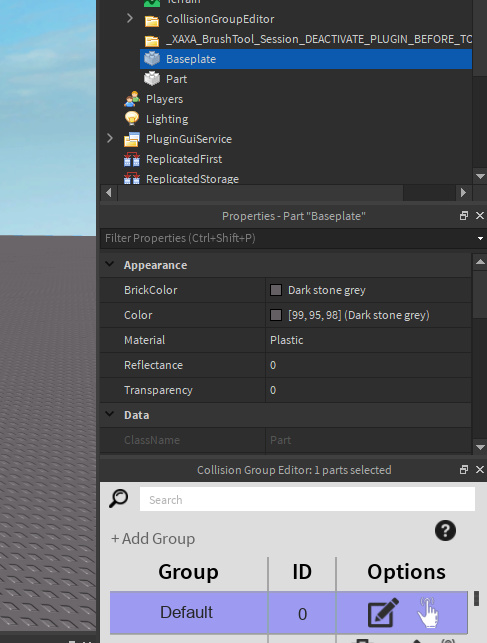
Open the Collision Groups Manager: In the 'Model' tab, locate the 'Physics' section. Click on 'Collision Groups'. This will open a dedicated window where you can manage all your collision groups.
Create New Collision Groups: In the 'Collision Groups' window, you'll see a default group named 'Default'. To add a new group, simply type a descriptive name (e.g., 'Players', 'Projectiles', 'Scenery', 'Interactables') into the 'Add Group' field and press 'Enter' or click the 'Add' button. Aim for clear, concise names that reflect the purpose of the objects within that group.
Define Collision Rules (The Collision Matrix): This is the core of the system. In the Collision Groups window, you'll see a grid, also known as the collision matrix. The rows and columns represent your created groups. A checked box at the intersection of two groups means they WILL collide. An unchecked box means they WILL NOT collide. By default, all groups collide with each other. Click a checkbox to toggle collision between two groups. For example, if you want 'Players' to ignore 'Projectiles', find the intersection of 'Players' and 'Projectiles' and uncheck the box. Repeat this for all desired interactions.
Assign Parts to Collision Groups: Select the parts, models, or even entire folders of objects in your workspace that you want to assign to a specific group. In the 'Properties' window for the selected objects, find the 'CollisionGroupId' property. Click the dropdown menu and select the group name you wish to assign them to. You can assign multiple parts to the same group simultaneously by selecting them all before changing the property.
Scripting Collision Group Assignment (Optional but Powerful): For dynamic changes or complex object generation, you might want to assign collision groups via scripting. You can use the PhysicsService to do this. For example:
local PhysicsService = game:GetService('PhysicsService')
local playerPartsGroup = PhysicsService:GetCollisionGroupId('Players')
local myPart = game.Workspace.MyPlayerPart
myPart.CollisionGroupId = playerPartsGroup
This method allows you to change a part's collision group on the fly, which is incredibly useful for abilities, temporary states, or scripted events.
Regularly reviewing your collision matrix and group assignments is a good practice, especially during development phases. As your game grows, new object types might require new collision groups, and existing rules may need adjustment. Staying organized with your group names will save you headaches down the line.
Can Collision Groups Improve Game Performance and User Experience?
Absolutely, collision groups significantly improve both game performance and user experience, which is paramount for today's busy gamers. From a performance standpoint, by explicitly defining which object groups can and cannot collide, you drastically reduce the computational load on Roblox's physics engine. Instead of checking every single part against every other single part for potential interactions (which can be a massive number of checks in a large game), the engine only performs calculations for groups that are set to collide. This reduction in unnecessary calculations translates directly into fewer lag spikes, higher frame rates, and a smoother overall experience, particularly beneficial for players on mobile devices, where processing power is more limited. Gamers, especially those who appreciate optimized experiences, will notice and value a game that runs fluidly.
From a user experience perspective, the benefits are equally profound. Collision groups eliminate unpredictable and frustrating glitches like objects phasing through walls, characters getting stuck in geometry, or projectiles interacting with unintended targets. This level of precision makes your game feel polished, reliable, and professional. Players can trust the game's physics, allowing them to focus on gameplay, strategy, and social interaction rather than battling bugs. This reliability fosters a deeper immersion and satisfaction, which is exactly what a gamer balancing work and life commitments seeks when they boot up Roblox to unwind. It allows for intentional game design, where every interaction is a deliberate choice by the developer, leading to a much more enjoyable and less frustrating time for everyone.
What Are Common Pitfalls When Using Collision Groups and How to Avoid Them?
While powerful, Collision Group IDs can lead to some common pitfalls if not used carefully. Being aware of these will save you valuable development time:
Forgetting to Assign Parts: The most common mistake is creating groups but forgetting to assign parts to them. A part not explicitly assigned to a custom group will remain in the 'Default' group. If you've set 'Default' to ignore other crucial groups, these unassigned parts will behave unexpectedly. Always double-check your part properties.
Over-Complicating the Matrix: It's easy to get carried away and create too many groups or an overly complex collision matrix. This can become difficult to manage and debug. Start with the fewest groups necessary and only add more as specific collision requirements arise. Simple, descriptive names for your groups are also key to maintainability.
Confusing CanCollide with Collision Groups: Remember that 'CanCollide' is a property for individual parts, while 'CollisionGroupId' governs interactions between *groups* of parts. If 'CanCollide' is set to 'false' on a part, it will never collide, regardless of its collision group. Ensure your 'CanCollide' property is 'true' for parts you expect to collide, and then use collision groups for fine-tuned filtering.
Scripting Errors in Dynamic Assignment: When dynamically changing collision groups via scripts, ensure your scripts are robust. Errors in getting group IDs or assigning them can lead to parts being in the wrong groups or no group at all. Always test scripted changes thoroughly, especially for player-related abilities or interactive elements.
Ignoring Performance Implications: While collision groups generally boost performance, creating an excessively large number of groups (hundreds) or constantly changing groups for thousands of parts in a script can introduce overhead. Strike a balance; use groups effectively for distinct physical behaviors, but don't over-engineer simple scenarios.
Lack of Documentation/Team Communication: In team projects, if one developer changes collision group rules or names without communicating, it can break another's work. Maintain clear documentation of your collision groups and their intended interactions, especially on larger projects. Collaboration tools and clear communication are as important as the code itself.
By keeping these common traps in mind, you can leverage Collision Group IDs to their full potential, creating a robust and performant game environment without unnecessary headaches.
How Do Collision Groups Fit Into Modern Roblox Game Design Trends?
Modern Roblox game design, especially in 2026, increasingly emphasizes immersive experiences, social interaction, and dynamic gameplay. Collision groups are perfectly positioned to support these trends. For instance, in social hangout games or role-playing experiences that are hugely popular, collision groups allow for detailed environmental interactions. Imagine a game where certain objects are 'ghostly' to players but solid to non-player characters, or where interactive puzzle elements only respond to specific player actions through filtered collisions. This level of detail elevates the experience beyond simple 'walk and talk' scenarios, fostering deeper engagement.
With the rise of cross-play between mobile, PC, and console, consistent physics behavior across all platforms is non-negotiable. Collision groups ensure that your game's fundamental interactions remain stable, regardless of the device a player is using. This consistency is crucial for competitive games and even for casual experiences, where a bug on one platform can sour the entire experience. Furthermore, many modern games incorporate complex ability systems or environmental hazards. Collision groups provide the backbone for these systems, allowing developers to create intricate projectile paths, area-of-effect abilities that only affect certain entities, or temporary invincibility states, all without resorting to hacky workarounds or complex raycasting for every interaction. They streamline the development of dynamic and responsive worlds, which are key to attracting and retaining the modern gamer looking for quality and reliability.
Are There Advanced Techniques for Using Collision Group IDs Effectively?
Absolutely, once you've grasped the basics, you can delve into more advanced techniques to maximize the power of Collision Group IDs, making your Roblox games truly standout:
Dynamic Collision Changes for Abilities: Instead of fixed collision rules, use scripts to dynamically change a player's collision group when they activate an ability. For example, a 'Phase Through Walls' ability could temporarily move the player into a 'Ghost' collision group that ignores 'Environment' objects, then move them back to 'Players' when the ability ends. This adds depth and strategic elements to your gameplay.
Efficiently Handling Projectiles: For games with many projectiles (bullets, magic spells, arrows), use collision groups to define what they interact with. A 'Bullet' group might only collide with 'Enemies' and 'Walls', ignoring 'Players' (if friendly fire isn't desired) or 'PowerUps'. This not only looks cleaner but also significantly reduces the physics engine's workload, improving performance in action-packed scenarios.
Custom Physics Layers for Complex Interactions: Consider a game where certain elements react differently to gravity or forces. While collision groups don't directly control gravity, they can manage what objects can interact with force fields or specific triggers. You could have a 'LightObject' group that is affected by a 'WindZone' collision group, while 'HeavyObject' ignores it, creating nuanced environmental puzzles.
Leveraging Scripted Assignments for Generated Content: If your game generates parts dynamically (e.g., destructible environments, procedural levels), script the assignment of collision groups. For example, when a wall breaks into fragments, automatically assign those fragments to a 'Debris' group that might ignore players but still collide with the ground, preventing them from causing unwanted interactions or performance issues.
Optimizing for Specific Device Types: While collision groups inherently help performance across devices, you can use them strategically. For lower-end mobile devices, you might have certain 'decorative' background objects assigned to a group that ignores almost everything, further reducing physics computations. On higher-end PCs, you might enable more complex collision interactions.
These advanced techniques allow you to move beyond basic collision filtering, enabling sophisticated gameplay mechanics and a truly optimized experience for your diverse player base, whether they're looking for competitive thrill or a relaxing escape.
How Does This Impact Mobile and Cross-Play Experiences?
The impact of well-managed Collision Group IDs on mobile and cross-play experiences is profound and cannot be overstated. With mobile gaming dominating recent market data, and Roblox being a primary platform for this, ensuring a smooth experience on phones and tablets is critical. Mobile devices typically have less processing power and memory compared to PCs or consoles. Without collision groups, the physics engine would be forced to calculate countless unnecessary interactions, leading to severe lag, dropped frames, and potentially game crashes on mobile. By filtering collisions, you lighten the load, allowing your game to run much more efficiently, providing a consistent and enjoyable experience for mobile players. This directly addresses a common pain point for gamers on a budget or those playing on the go: performance issues.
For cross-play, where players from different platforms interact in the same game world, consistent physics behavior is absolutely essential. A player on PC should have the same collision experience as a player on mobile or console. If a PC player can jump through a wall that a mobile player cannot, it creates an unfair and frustrating disparity. Collision groups standardize these interactions across all platforms. They ensure that the rules of your game's physical world are universally applied and respected, regardless of the hardware. This consistency fosters fair play, reduces player complaints, and ultimately enhances the social, shared experience that is a hallmark of Roblox gaming. It means your game performs reliably, regardless of whether someone is unwinding on their phone or intensely gaming on their desktop.
Where Can I Find Examples or Tutorials for Complex Collision Group Scenarios?
Roblox's developer community is a fantastic resource for learning complex Collision Group scenarios. Here are some excellent places to look:
Roblox Creator Documentation: The official Roblox Developer Hub is always your first stop. It has comprehensive guides and API references for PhysicsService, which is what you use to manage collision groups via scripting. Search for 'Collision Groups' or 'PhysicsService'.
YouTube Tutorials: Many experienced Roblox developers and content creators publish video tutorials. Search terms like 'Roblox advanced collision groups', 'Roblox physics filtering tutorial', or 'scripting collision groups Roblox' often yield excellent visual guides. Channels dedicated to Roblox scripting or game development are good places to start.
Roblox Developer Forum: This is a vibrant community where developers share knowledge, ask questions, and showcase their projects. Searching the forum for 'collision group examples' or specific problems can lead to detailed discussions, code snippets, and solutions from other creators. It's a great place to get real-world insights and ask specific questions.
Open-Source Roblox Games/Models: Analyzing the code and setup of open-source projects or freely available models in the Roblox marketplace can provide practical examples. Look for games that have complex physics interactions or unique abilities and see how they've implemented their collision groups. This 'learning by doing' and dissecting existing projects is a powerful way to understand practical applications.
Discord Communities: Many Roblox development Discord servers have dedicated channels for scripting or physics help. You can often find developers willing to share their knowledge, provide examples, or help troubleshoot your specific scenarios in real-time. These communities are excellent for staying current with trends and getting quick advice.
By exploring these resources, you can find a wealth of information, from basic setup to highly specific, advanced implementations, helping you tackle even the most intricate collision challenges in your games.
What if my Collision Groups Aren't Working as Expected Troubleshooting Tips?
It's common for Collision Groups to not behave exactly as intended on the first try. Here are some troubleshooting tips to get your physics back on track:
Check Part 'CanCollide' Property: This is the most frequent culprit. Remember, if a part's 'CanCollide' property is set to 'false' in its properties, it will never collide, regardless of its Collision Group. Ensure 'CanCollide' is 'true' for all parts you expect to interact.
Verify Collision Group Assignment: Select the parts in question and check their 'CollisionGroupId' property in the 'Properties' window. Confirm they are assigned to the correct custom group and not still in 'Default'. Sometimes, new parts get added without the correct group assigned.
Inspect the Collision Matrix: Open the Collision Groups Manager ('Model' tab > 'Physics' > 'Collision Groups'). Carefully review the intersection between the two groups you expect to interact (or not interact). Is the checkbox checked (colliding) or unchecked (ignoring) as per your design? This visual check is crucial.
Look for Conflicting Scripts: If you're dynamically assigning collision groups via scripts, check for any other scripts that might be inadvertently overriding your assignments. Use print statements or the debugger to trace a part's 'CollisionGroupId' over time. Ensure your PhysicsService calls are correct, especially when getting group IDs by name.
Simplify and Isolate: If you have a complex setup, try to isolate the problem. Create a new, minimal test place with only the two groups and a couple of parts that are failing. This can help you pinpoint if the issue is with the group setup itself or a conflict within your larger game.
Check for 'Anchored' Parts: While 'Anchored' parts are immovable, they can still have collision properties. Ensure that if an anchored part is meant to interact as part of a collision group, its 'CanCollide' is true and it's assigned to the correct group. However, anchored parts won't move from collisions.
Restart Roblox Studio: Sometimes, Studio can have cached states. A quick restart can often resolve minor display or behavior glitches that might be masking the true issue.
By systematically going through these checks, you can efficiently diagnose and resolve most Collision Group related issues, ensuring your game's physics behave predictably and reliably.
In summary, mastering Roblox Collision Group IDs is a game-changer for any serious developer looking to create polished, high-performance, and immersive experiences. For the average gamer, who often juggles life's demands and seeks quality entertainment without frustration, these behind-the-scenes mechanics mean the difference between a buggy mess and a truly enjoyable escape. From preventing unwanted glitches and optimizing performance for mobile and cross-play to enabling complex gameplay mechanics, collision groups provide the precise control needed to build professional-grade worlds. By understanding how to set them up, manage them, and troubleshoot common issues, you empower yourself to craft more reliable, engaging, and memorable Roblox games that cater directly to what today's gamers truly value: a smooth, fun, and well-designed experience. What's your biggest challenge in optimizing game physics? Comment below and share your tips!
FAQ Section
Q: Can Collision Groups completely replace the 'CanCollide' property?
A: No, Collision Groups do not replace 'CanCollide'. 'CanCollide' is a fundamental property that determines if a part can collide at all. Collision Groups then provide a filtering layer on top of this, defining *which* specific groups of parts will or will not collide, assuming their 'CanCollide' is true. Both work in conjunction.
Q: Is there a limit to how many Collision Groups I can create?
A: Yes, Roblox Studio currently supports up to 32 active collision groups (including the 'Default' group). While this might seem like a limitation, it's generally more than enough for even complex games. Efficient design often means grouping similar objects, rather than creating a unique group for every single item.
Q: Do Collision Groups work with models or just individual parts?
A: Collision Groups work by assigning individual BaseParts to a group via their 'CollisionGroupId' property. However, when you select a Model or Folder in the Explorer, you can often change the 'CollisionGroupId' property for all contained parts simultaneously through the Properties window, making it efficient for managing groups of parts within models.
Q: Can players in the same Collision Group collide with each other?
A: Yes, by default. When you create a new collision group, the collision matrix automatically sets that group to collide with itself. If you want players within the 'Players' group to *not* collide with each other (e.g., for a non-player collision zone), you would uncheck the box where 'Players' intersects with 'Players' in the matrix.
Q: What happens if a part is not assigned to any custom Collision Group?
A: If a part is not explicitly assigned to a custom Collision Group, it automatically belongs to the 'Default' group. Its collision behavior will then be determined by how the 'Default' group is configured to interact with all other groups in your collision matrix.
Q: Are Collision Groups primarily for visual effects or actual physics?
A: Collision Groups are entirely for actual physics interactions. They control the fundamental physical responses between objects in your game, dictating whether two groups of parts will physically register a collision, bounce off each other, or pass right through. This directly impacts gameplay and world integrity.
Master Roblox Collision Group IDs, prevent unwanted object interactions, optimize game physics, enhance player experience, improve game performance, easily manage object collisions, create custom collision behaviors, troubleshoot common physics issues.
35


Updates To Collision Groups Page 2 Developer Forum 2 690x391 . Roblox JToH Tower Building Tutorial 3 Collision Groups YouTube . Updates To Collision Groups Page 2 Developer Forum . Roblox Studio How To Use Collision Groups YouTube . Collision Group Editor Plugin Creations Feedback Developer Forum


Announcing Collision Groups Editor Developer Forum . ROBLOX STUDIO COLLISION GROUP YouTube . Player Collision Group Scripting Support Developer Forum Roblox . Updates To Collision Groups Developer Forum Roblox . My Collision Groups Editor Community Resources Developer Forum Roblox


Collision Groups Roblox Studio YouTube . Can T Create New Collision Group In Collision Groups Editor Studio . How Do I Make A Model Not Collide With Another Model Scripting . Player Collision Group Scripting Support Developer Forum Roblox . How To Find Group Id On Roblox Quick Easy 2025 Tutorial YouTube



Does Not Behave Engine Bugs . How To Find Group ID In Roblox YouTube . Collision Roblox ID Roblox Music Codes 1279629514 . Can Anyone Actually Explain How On . Is




100 Roblox Music Code ID S 2026 WORKING AFTER UPDATE . Collision Course Roblox ID Roblox Music Codes 1848353777 . Is . Trash Race Collision Roblox ID Roblox Music Codes 1847405562 . 20 Roblox Full Music Codes IDs January 2026 WORKING ROBLOX ID



Sonic CD Collision Chaos Past US Version Roblox ID Roblox Music Codes 3618913304 . 100 Verified Roblox Song IDs Still Working YouTube . Error Platform Usage Support Developer Forum Roblox . Roblox Car Driving Indonesia New Codes January 2026 YouTube . Seeking Illuminati Song ID Roblox Codes In 2026


How Would I Make A Collision Group For This Block Scripting Support . Outdated Roblox Studio Tutorials Part 50 How To Use Collision . My Collision Groups Editor Community Resources Developer Forum Roblox . Roblox At GDC 2026 Where To Find Us All Week Roblox. Where Are The Collisions Groups Platform Usage Support Developer